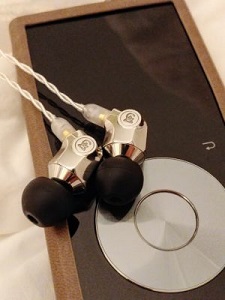
Astell & Kern X Volk Audio STELLA
Astell & Kern – Astell & Kern Stella
Audio46 Stella (1 in stock at review time) – Astell & Kern X Volk Audio Stella

As always, I feel inclined to add a few tags, footnotes, disclaimers, warnings, caution signs, and perhaps a small legal department.
Sound reviews are subjective opinions. Mine is no different. Like every reviewer on the internet, I am an expert, but only in the highly specialized field of my own opinion. I don’t expect everyone to agree with me, and honestly, if universal agreement ever happened, I’d probably assume something had gone terribly wrong.
You can’t tell me what I’m seeing, hearing, or how my brain is processing it, just as I can’t tell you. Human perception is funny that way. If it were objective, audio forums would be about three posts long and half the internet would suddenly be unemployed.
I write my reviews with honesty and sincerity. That approach has earned me some wonderful friends over the years, while simultaneously setting fire to a few relationships. Such is the natural lifecycle of strong opinions on expensive audio gear.
So, as always, your mileage may vary. If your opinion differs from mine, that’s perfectly fine. I don’t need to convince you, and you’re unlikely to convince me. We’ll simply agree to disagree, shake virtual hands, and move on, at least until the next review, when we’ll all gather again to argue passionately about tiny differences in sound that may or may not exist.
And with that disclaimer out of the way, let’s begin.
A Little Technical Stuff:
Specs
Driver
- 1 × VOLK M9-R 9 mm Dynamic Driver(Low Frequencies)
- 5 × Sonion Balanced Armature Drivers(2 for Low frequencies, 3 for Mids)
- 2 × VOLK MP-2 Planar Magnetic Drivers(Highs)
- 4 × Sonion Electrostatic Tweeters (Highs)
Cable
- 7 AWG, 4 Core Configuration
- Hybrid Conductor Array: 5N LCOFC Copper, 4N Silver and 24K Gold
- 12-Strand Litz Type 4S Geometry
- 500D Macro-Molecular Fiber Reinforcement Core
- SoftFlex PVC Insulation
- Midnight Black Braided Nylon Outer Jacket
- 6061-T6 Anodized Black Hardware with 316 Stainless Steel Mirror Polished Accents
- 4 AEC Balanced Termination
Materials & Finish
- 6061-T6 Aluminum Chassis, Bead-Blasted and Anodized Satin Black
- 6061-T6 Aluminum Central Plate, Anodized Satin Black with a Diamond-Cut Mirror Finish Face
- Sapphire Crystal Glass Panel, 9H
- 316 Stainless-Steel Faceplate Frame, Mirror Polished
CROSSOVER DESIGN
6-Way Crossover Network with multi-stage internal damping and tuned chassis venting
Components
VENT ARCHITECTURE
Machined into the aluminum shell and stainless-steel frame, the vent system regulates airflow throughout the enclosure. Its geometry equalizes internal pressure, stabilizes diaphragm motion, and maintains linear driver response. Each aperture is defined by depth, diameter, and damping profile to balance pressure relief and isolation. This prevents standing waves and suppresses low-frequency bloom while preserving the integrity of the acoustic chamber. The vents function as a unified pressure-control system, ensuring consistency between both channels and completing STELLA’s structural and acoustic equilibrium.
Frequency Response
10 Hz – 45 kHz
Sensitivity
103.8 dB @ 1 kHz
Impedance
7.17 Ω @ 1 kHz
-MRSP: Universal fit $3900.00
Greetings from the Audio Rabbit Hole. I have had the Astell & Kern X Volk Audio Stella in my possession for a little over three weeks, putting it through its paces as I prepare to write this review. I say “putting it through its paces” as if it were work, but the real work begins when I start compiling notes and shaping the review. The easy part is experiencing the build quality and cycling through playlist after playlist while listening to new gear, strictly for research purposes, of course. The real challenge is writing “Astell & Kern X Volk Audio Stella” repeatedly without developing carpal tunnel, so moving forward in this review, I will call it Stella.
This is my second opportunity to review a Volk Audio release, the first being the Volk Audio ÉTOILE. I enjoyed its unique tuning and the way Jack Vang, owner of Volk Audio, and producer Michael Graves of Osiris Studio collaborated on that inaugural release. Apparently, when the first collaboration works, the natural next step is to make the guest list a little more expensive.
Michael Graves is still collaborating with Jack, but this time there is a third partner in the mix, with the project falling under the Astell & Kern umbrella. I am fighting the urge to draw comparisons to any love triangle, mostly because this is an audio review, not a premium cable soap opera.
I introduced Volk Audio and Jack Vang in the ÉTOILE review, so I will skip the rerun and spare everyone the director’s cut. If you want more background, please click the ÉTOILE link above. For now, we will jump to the marketing hype on the Astell & Kern website. Before we go there, anyone who follows me knows I have always supported A&K and, at this point, feel I should own at least one commemorative brick in their headquarters for all the excellent gear I have purchased over the years.
A Little Marketing Hype:
VOLK Audio X Astell&Kern
A CONSTELLATION OF PURPOSE
STELLA is the result of three disciplines guided by a single pursuit of truth in sound.
Astell&Kern represents the precision of modern engineering. VOLK Audio defines the architecture of design and acoustic form. Michael Graves brings the mastery of a five-time GRAMMY Award-winning engineer who understands the line between control and emotion. Led by VOLK founder Jack Vang, whose decade of experience helped shape a generation of in-ear design, the project evolved through exchange and refinement. Each discipline strengthened the others, creating an instrument defined by proportion, balance, and restraint. Throughout development, the VOLK engineering team worked closely with Astell&Kern to advance both process and performance.
New acoustic architectures and driver assemblies have been created specifically for STELLA to achieve the precision and tonal balance defined in its target response. These innovations were refined and calibrated through extensive sessions with Michael Graves at Osiris Studio in Los Angeles. Each evaluation focused on tonal accuracy, phase alignment, and spatial coherence, ensuring that every decision served the music itself.
VOLK Audio
“This collaboration was both an honor and a challenge that demanded absolute precision. Both Astell&Kern’s and Michael Graves’ standards for excellence mirror our own, and that alignment pushed every part of the process to its limits. The goal was to create something focused, balanced, and precise, an IEM accurate enough for the most demanding mastering environments yet engaging enough for personal listening.
STELLA carries that philosophy forward, a reflection of what’s possible when precision meets purpose.”
Jack Vang, Founder of VOLK Audio

- 12-Driver Quadbrid
- 6-Way Crossover Network
- 5 Precision Sound Tubes
STELLA is built on a 12-driver quadbrid architecture that unites four transducer technologies within a single, coherent system.
Each element was developed for its distinct role and tuned through precise control of phase, pressure, and motion.
Its design reflects the same discipline that governs its form. Every contour, cavity, and circuit exists to serve acoustic integrity. The structure is shaped by performance, the performance defined by structure. Nothing is decorative, nothing is redundant.
Every driver operates within its natural range, contributing its character without interference. No forced equalization. No artificial enhancement. Only precision through purpose.

Technical Version
- LF-H System | VOLK M9-R 9mm Subwoofer + Dual Sonion Armatures
- Tri-Armature Array | Sonion
- HF-H System | VOLK MP-2 Dual Planars + Quad Sonion Electrostatics
- 0.78 2-pin Connector
- 6061-T6 Aluminum Shell | Satin Black Anodized
- Faceplate Assembly | 6061-T6 Central Plate, Sapphire Glass, and Stainless-Steel Frame
WHAT’S IN THE BOX:
Included:
- STELLA In-Ear Monitors
- VOLK Hybrid Conductor Cable
- Leather Carrying Case
- Leather Cable Tie
- VOLK Silicone Ear Tips | S / M / L
- Symbio F Foam Ear Tips | S / M / L
- Microfiber Cleaning Cloth
Unboxing and Accessories
Stella’s unboxing experience has its pluses and minuses. For an IEM pushing the $4K range, many audiophiles understandably expect more than a box, a cable, and a polite nod from the packaging department. I feel the same way, not because I need velvet ropes and a tiny butler, but because the accessories and presentation should meaningfully enhance the ownership experience.
I will keep the description straightforward and let the photos do some of the heavy lifting, since pictures are generally better at showing packaging than I am at pretending cardboard is thrilling.

The presentation starts with a black rectangular box, housed in a matching sleeve, that displays the Stella name alongside the Astell&Kern and Volk Audio branding. Removing the sleeve reveals the main box, which has a front-wrapping lid. Lift the flap, and you are greeted by the IEM display level, along with two pullout drawers that hold the accessories. It is clean, organized, and premium enough to feel intentional, even if it stops short of making you hear angelic choir music when the lid opens.

Level one has a protective foam layer covering the IEMs, keeping the display surface clean and the earpieces secure during shipping. Once you remove the foam, Stella is presented beneath a clear plastic cover with the Stella name prominently displayed above the monitors. The layout draws attention to the sapphire-glass-covered faceplates and the visible Astell&Kern and Volk Audio branding, creating a clean first impression before moving on to a closer examination of build quality and design later in the review.

Unboxing Stella is a cleaner, more understated experience than Volk Audio’s earlier ÉTOILE package. Instead of velvet dust bags and collector-style flourishes, Stella leans into a more technical, collaborative identity that aligns with the Astell&Kern partnership. The black box, tidy internal layout, and restrained branding feel modern and deliberate, even if the presentation is more “premium lab equipment” than “royal treasure chest.”


The thoughtful part of the package is its organization. The IEMs are displayed cleanly, the accessories are separated into a drawer, and the overall experience feels intentional rather than thrown together. I would still like to see a little more accessory generosity at this price, because once you are knocking on the $4K door, the doorbell should probably be gold-plated and play a lossless chime.

The included accessories consist of a leather-style storage puck large enough to comfortably accommodate Stella, a cable strap to reduce tangling, a cleaning cloth, three sizes of foam eartips, and three sizes of silicone eartips. Ear tip selection is one area where I have a minor concern with the overall package. At this price point, a broader, more thoughtfully presented eartip selection would add meaningful value, particularly because many listeners prefer to use the tips used during the tuning process. While I do not personally use foam tips, additional sizes, alternative materials, and dedicated branded storage containers would make the accessory package feel more complete than the current metal card that holds the tips. When an IEM enters the $4K neighborhood, even the eartips deserve better real estate.

The cable is the final part of the unboxing I want to discuss. I listed its full specifications earlier, so I will focus here on presentation and usability. Aesthetically, I like the cable and think it pairs well with the IEMs. The braided nylon jacket is nicely finished and does not produce noticeable microphonics when rubbing against clothing. The 4.4 mm plug is black with a silver center ring marked Astell&Kern, and the black 2-pin connectors are clearly labeled L and R. One side carries the Volk branding, while the other features the Astell&Kern “A.” The cable also includes a black splitter with a silver ring marked Volk, along with a functional chin slider. Overall, it is a well-executed cable that complements the package nicely.


Build Quality and Fit:
Stella’s build quality immediately stands out. The shells use a 6061-T6 aluminum chassis with a satin black anodized finish, a sapphire crystal glass panel, and a mirror-polished stainless-steel faceplate frame. The result is a sleek, dense, premium-feeling IEM that looks more like precision machinery than jewelry, which is exactly the kind of industrial confidence I like in high-end audio gear.
In terms of weight, Stella has more physical presence than ÉTOILE, and that is not a negative for me. The aluminum and stainless-steel construction gives it a reassuring heft without feeling uncomfortable. Some listeners prefer lighter resin shells, but I tend to associate a little weight with premium construction, as long as it does not feel like I accidentally installed wheel weights in my ears. Stella feels substantial while remaining comfortable during longer listening sessions.
The fit of Stella is what I would expect from a modern multi-driver flagship. It is not tiny, but the contouring fits my ears well and gives the shell a secure, almost custom-like feel. As always, fit is personal, and listeners with smaller ears may want to audition first if possible. At this price, guessing on fit feels a bit like buying shoes online for a marathon and hoping optimism has arch support.

The nozzle design is practical and well considered, with enough length and grip to hold tips securely in place. Every reviewer has a few design pet peeves, and if you have read my reviews before, you know loose-fitting tips are high on my list. Stella avoids that frustration, which means fewer moments spent crawling around the floor looking for an eartip that launched itself into another dimension. The nozzle isn’t excessively long and features five bores. The lip at the end of the nozzle is perfect!

For my ears, as well as my visual satisfaction, I must give the build quality, fit, and aesthetics two thumbs-up.
Review Setup:
The review was written using a couple of sources: the Astell & Kern PD10, affectionately known as the poor man’s SP4000; the Fiio M27 Ti; and the A&K HC5 dongle. My sample music included 320 kbps files, FLAC, 24-bit files, Spotify lossless streaming, and Qobuz, because apparently my playlists now require a résumé. Stella is easy enough to drive that I never felt the need to add an external amp, which is always nice when your listening setup does not need its own power grid.
Moving on to the sound section….
If I had to sum up Stella in just a few words, I would call it the flagship IEM that decided to be the consummate all-arounder instead of showing up wearing a lab coat and demanding I listen only to perfectly recorded jazz in a silent room. The things I loved about ÉTOILE, I like even more with Stella. If I want to sit down, shut off the analysis machine in my brain, and enjoy music, I reach for Stella. If I want to listen critically and dissect the recording as if I were preparing audio evidence for court, ÉTOILE still has its place. I stand by my ÉTOILE review, but Stella surprised me in a way I did not fully expect.

Generally, I try to avoid reading or watching reviews before writing my own, mostly so I do not accidentally absorb someone else’s opinion through audiophile osmosis and start describing treble with words like “ethereal” before breakfast. Fortunately and unfortunately, there isn’t a ton of information or reviews about Stella. I say “unfortunate” because the market is now so packed with gear that even excellent products can disappear into the inventory pile like one black ear tip dropped onto a black carpet at midnight.
Stella is a flagship and priced in what would have been mega-flagship territory a couple of years ago. I realize a $4K IEM is not going to attract the same crowd as a $500 set, because at that price, most people do not casually click “add to cart” unless their wallet has a therapist on speed dial. This is definitely a niche space, and Stella lives in the part of it where people compare nozzle geometries without blinking.
I have seen a few comments suggesting Stella’s treble can be a bit much, and I understand how that could happen depending on ears, tips, sources, volume, moon phase, and whatever else we audiophiles blame when two people hear the same IEM differently. For my ears, I have not encountered anything I would call harsh or sibilant. Stella definitely has energy up top, but it has not crossed into ice-pick territory for me. It responds beautifully to high-quality recordings, which is audiophile code for “your bad recordings may be asked to leave the premises.”

The midrange is natural, clean, and well separated without demanding attention. Vocals and instruments have enough presence to feel immediate, but Stella never pushes them forward like an overenthusiastic salesperson at an audio show. Layering is strong, individual parts are easy to follow, and the presentation feels impressively coherent, as if all twelve drivers showed up to the meeting, read the agenda, and agreed not to argue.
Listening to Spyro Gyra’s Jubilee in 24-bit/96 kHz FLAC, I noticed Stella made some tracks bloom in the mids while others stayed more reserved. Apparently, Stella has favorites, too.
Stella’s bass hits with solid impact, clear texture, and better physical presence than ÉTOILE. The sub-bass lift matches what I hear in practice: on The Beatles’ “Come Together,” the low end has real rumble and authority, but it never smears into the lower mids or muddies the vocal line. That balance is what makes the bass work so well for me. ÉTOILE had bass, but Stella brings it forward with more weight, better reach, and a stronger sense of foundation without turning the tuning into a basshead carnival ride. It adds fullness to rock, drive to funk, and enough depth to electronic tracks, while staying controlled and versatile across genres.
I touched on the treble earlier, noting that some listeners have described Stella as a little “hot” up top at times. It is an understandable reaction, especially if someone is sensitive to upper-treble energy or pairs Stella with a brighter source or tip. I am sensitive to “hot” treble and upper-mids, which is why I am pleased to have no issue. For my ears, though, the treble is what ties the whole frequency response together. It adds the air, extension, and upper-end contrast needed to keep the stronger sub-bass from making the presentation feel too thick or bottom-heavy. There is enough sparkle to highlight cymbal work, vocal overtones, and room cues, but I do not hear it crossing into harsh or sibilant territory. Instead, it acts like seasoning: noticeable, important, and capable of ruining dinner if overdone, but Stella seems to know when to put the shaker down.

Stella’s stage is precise, accurate, and natural rather than artificially stretched. It gives instruments and vocals believable placement, with enough width and depth to feel spacious without sounding like someone inflated the room with an audiophile balloon pump. Notes have clean edges, the space between instruments is easy to read, and the presentation avoids that fake halo effect where everything sounds bigger but not necessarily more realistic. What I appreciate most is the realism: Stella does not try to impress by making every recording sound enormous. Instead, it lets the stage scale with the track, which makes smaller recordings feel intimate and larger recordings open up naturally.
If I had to summarize Stella’s sound, I would say this is the kind of IEM you put in your ears and then stop thinking about the IEM. That may sound simple, but it is not easy to achieve. Stella has enough technical ability to satisfy the part of my brain that wants separation, detail, layering, and control, but it does not force every listening session to become a lab report. It lets the music take the lead. The bass gives the presentation body, the mids stay clean and coherent, the treble adds air without punishment, and the stage feels realistic instead of artificially inflated. In a market full of specialists chasing one particular trick, Stella feels like a true all-arounder. I will usually take a strong jack-of-all-trades over a one-trick flagship that only behaves when the playlist, source, tips, weather, and my caffeine level are perfectly aligned.
You might want to own this IEM if:
+ You want bass with texture, control, and actual manners, not a subwoofer cosplay event happening inside your skull.
+ You prefer a smooth, balanced signature that does not start a fistfight with your ears after three songs.
+ You like musical, non-fatiguing tuning for long listening sessions, because apparently some of us enjoy finishing an album without needing a recovery snack and emotional support eartip.
+ You are sensitive to upper-mid glare and sibilance, but still want treble sparkle that says “detail” instead of “dental cleaning with cymbals.”
+ You appreciate a spacious, immersive stage that feels believable, not like the mix was stretched with Photoshop and a dream.

In Closing
Stella is the kind of flagship that doesn’t need to shout about being one. It has the driver count, the collaboration pedigree, the premium materials, and the price tag capable of making your wallet fake a medical emergency, but what matters most is that it sounds complete. The bass has weight without turning into a demolition permit, the mids are clean and coherent, the treble brings air and detail without reaching for the dental tools, and the stage feels believable instead of artificially inflated for showroom drama.
What impressed me most was how easy it is to enjoy Stella. Some high-end IEMs feel like they want you to sit upright, dim the lights, pull out a notebook, and apologize to the recording engineer before pressing play. Stella can do the technical thing, and it does it very well, but it never forgets that music is supposed to be music. It is refined, resolving, spacious, and controlled, yet still relaxed enough to let me stop analyzing and listen. That is harder to pull off than another spec-sheet victory lap.
Is Stella for everyone? Absolutely not and only because of it’s flagship price. Stella is a nearly $4K IEM, which means common sense, financial responsibility, and several tiny imaginary accountants may show up to ask questions. But if you are already shopping in this part of the rabbit hole, Stella deserves serious attention. It is not the flashiest specialist, the most ridiculous bass cannon, or the brightest detail microscope. It is something more useful: a mature, beautifully built, highly capable all-around flagship that I kept reaching for because it made listening fun. And really, in a hobby where we can spend hours arguing about nozzle geometry, that might be the highest compliment I can give. I believe Jack Vang, Michael Graves, and Astell & Kern hit it out of the park with the Stella. Congratulations!
As always I feel so inclined to make some tags and footnotes. Sound reviews are subjective opinions. My review is no different, like all reviewers, I am an expert of my own opinion, only. I do not expect everyone to agree, nor do I care. You can’t tell me what I am seeing, or my brain is processing, just like I can’t tell you. I write my reviews with honesty and sincerity, which has gotten me some new friends along the way but has also cost me quite a few relationships. So YMMV, and if your opinion differs, I don’t care. We will agree to disagree, until the next review.
Related Posts
Thoughts on prototype vs. Massdrop Exclusive
I have been spending time with the ME and the…
Review: A Tale Of Pleasure And Pain – DUNU DK-3001
Pros - Sound quality Cons - The "ridge", isolation, short angled nozzle…